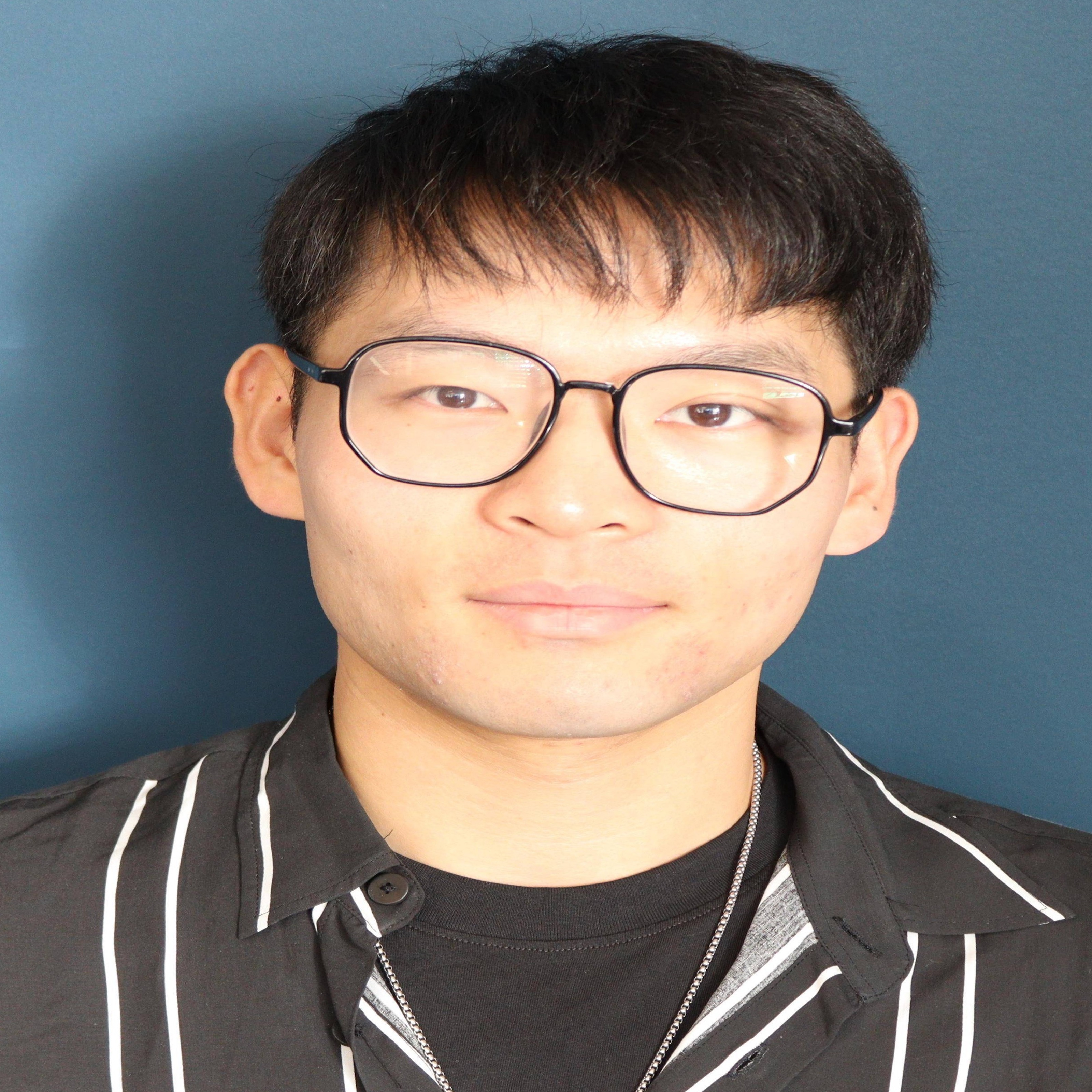
Ye He (何晔)
Mathematical foundations of generative AI, sampling, and generalization.
I am an Assistant Professor in the Department of Applied Mathematics at the University of Colorado Boulder.
My research studies the mathematical foundations of artificial intelligence and machine learning, with a particular interest in the mechanisms underlying generative models, sampling and inference, and generalization. I aim to understand how the structure of data and learning algorithms gives rise to effective representations, inductive biases, and scalable computational methods.
Previously, I was a Hale Visiting Assistant Professor in the School of Mathematics at the Georgia Institute of Technology, hosted by Prof. Molei Tao . I received my Ph.D. in Mathematics from the University of California, Davis, advised by Prof. Krishna Balasubramanian .
I am currently looking for Ph.D. students interested in generative modeling, sampling, generalization, and the mathematical foundations of machine learning.
Research
Mathematical foundations of modern machine learning, generative modeling, and inference.
My research broadly aims to characterize the mechanisms behind modern learning and inference methods, with an emphasis on the interaction between data structure, algorithmic dynamics, generalization, and computation.
Generative Models and Diffusion
I study the mathematical mechanisms underlying diffusion and related generative models, including generalization, classifier-free guidance, learned score functions, posterior structure, and data-dependent geometry.
Sampling and Inference
I develop and analyze scalable sampling and inference methods for complex distributions, including non-log-concave and heavy-tailed targets, particle-based methods, Langevin-type algorithms, and diffusion-based approaches.
Generalization and Inductive Bias
I study how structural properties of data and learning algorithms shape generalization, representation, and emergent geometric behavior in modern machine-learning models.
Publications
Papers in generative modeling, sampling, optimization, and the mathematical foundations of machine learning.
-
Finite-Particle Rates for Regularized Stein Variational Gradient DescentPreprint. Link
-
Diffusion Model's Generalization Can Be Characterized by Inductive Biases toward a Data-Dependent Ridge ManifoldNeurIPS 2026. Link
-
Theory-Informed Improvements to Classifier-Free Guidance for Discrete Diffusion ModelsICLR 2026. Link
-
What Exactly Does Guidance Do in Masked Discrete Diffusion ModelsICLR 2026. Link
-
Evaluating the Design Space of Diffusion-based Generative ModelsNeurIPS 2024. Link
-
A Separation in Heavy-tailed Sampling: Gaussian vs. Stable Oracles for Proximal SamplersNeurIPS 2024. Link
-
Zeroth-Order Sampling Methods for Non-Log-Concave Distributions: Alleviating Metastability by Denoising DiffusionNeurIPS 2024. Link
-
High-dimensional Scaling Limits and Fluctuations of Online Least-Squares SGD with Smooth CovarianceAnnals of Applied Probability. Link
-
Towards a Complete Analysis of Langevin Monte Carlo: Beyond Poincaré InequalityCOLT 2023. Link
-
An Analysis of Transformed Unadjusted Langevin Algorithm for Heavy-tailed SamplingIEEE Transactions on Information Theory. Link
-
Regularized Stein Variational Gradient FlowFoundations of Computational Mathematics. Link
-
Mean-Square Analysis of Discretized Itô Diffusions for Heavy-Tailed SamplingJournal of Machine Learning Research. Link
-
On the Ergodicity, Bias and Asymptotic Normality of Randomized Midpoint Sampling MethodNeurIPS 2020. Link
Teaching
Courses taught at the University of Colorado Boulder, Georgia Tech, and UC Davis.
Contact
The best way to reach me is by email.
Office
ECOT 337
Department of Applied Mathematics
University of Colorado Boulder
Boulder, CO 80309